I think Venezuela is such a rich country in different ways that I want to be an important part of it. So, in the future, if I have to go back and contribute to the country to go back as it was – one of the richest countries in Latin America – I would love to do it. Doing that through communication is a part of my mission in this world.
We went to my grandpa’s house to tell him we were moving out. “Grandpa, I’m going to Spain, I’m going to live there”, I said, and I was super excited. Of course, I didn’t want to live in Venezuela anymore, but he was so mad. He answered, “Why? Why are you going there? This is your country, and you should stay here”. He is from Spain, though. He was born in Tenerife and moved to Venezuela when he was seventeen, building a life there. A lot of people who go to Venezuela connect with the country so much that they feel like it’s home; that’s how magical that place is.
I really wish that Venezuela would be back to that. I hope that we will welcome a lot of people who are willing to settle down and fall in love with the country as my grandpa did. That is a dream many Venezuelans have; we are still very hopeful that the country will improve.
I remember, as a teenager, I was watching movies and seeing that other people my age were having a normal life. They could be in the streets with their friends, and I couldn’t even leave the house without my parents. It was too dangerous, especially for a woman. I was so frustrated, thinking “why can’t I have this?”, so one day, I came back from school and said to my parents “I really can’t stay one day longer here. I want to leave this country. I have no life here, so I don’t care if I have to stop studying to help you, but I really want to leave”.
I was the first one to verbalize that to my family, but my brother was also frustrated. A lot of students were protesting, and they were being arrested and killed because of that, despite protesting being a basic human right. So, when he told me, “Mari, I’m going to protest”, I could only answer, “No, you’re not”. I was so worried that something would happen to him, and he didn’t tell our parents.
Eventually, the chavistas, people who support the government of Nicolas Maduro, started posting pictures of my brother and other students involved in the protests as procurado (wanted) on social media. When our parents saw it, they were mad because he was exposed to danger, and they didn’t know. At the same time, they understood. Everybody was so frustrated with the government that it was hard for them to be against what he was doing when he was fighting for his rights.
My brother continued to protest for a couple of days after our parents found out, until he arrived home with a hurt arm. It was the perdigones, a gun with metal spheres they shot at the students to make them leave; it isn’t lethal, but his arm had bruised and a bit of blood. After we saw that, everything happened so fast, my parents quickly made the decision to move. Protecting our family is a Venezuelan core value; regardless of the situation, if we have a problem, we will always rely on each other.
We went to Barcelona, Spain, and in the beginning, it was the glory for me, a completely different world. I finally could do the things I couldn’t do in Venezuela, and I didn’t miss living there at all. I was avoiding reading every kind of news about the country and rejecting my culture all the time. I was focused on my life in Barcelona and grateful for the opportunities I had.
It was not until I moved to Australia to study English in 2023 that I started to feel most nostalgic for Venezuela; 7 years had passed by that time. Many Venezuelan talents were becoming internationally famous, so I was constantly seeing the pictures of Reinaldo Diaz. He shows the country’s natural beauty and is a photographer storyteller. I feel moved by his work.
Diaz rekindled a flame I had for storytelling. When I was young and still living in Venezuela, I admired Valentina Quintero’s reports about the indigenous communities. She is one of the most important Venezuelan journalists and was one of my role models. I wanted to follow the same career path as her. However, due to all the frustration and disconnection I felt these years, this desire was fading. I had forgotten about the beauty of my country and my culture, and Diaz sparked my longing for Venezuela again. I felt: “Wow, I want to go to Venezuela, I want to take pictures and do reporting, I will become a journalist”.
Unfortunately, I couldn’t afford to continue my studies in Australia. Coming back to Venezuela also still wasn’t a possibility due to the political situation. So, I moved to Belgium to study International Journalism, and it was not easy from the start. Even though I’m an extroverted and social person, in the beginning, I was always anxious and insecure. It was my first time in university, and studying in English, which I learned only for a year before moving.
English is not the first language of most of my classmates, either; it’s an international group. However, it is not so diverse; there are only 2 Latin Americans in Journalism, so I came across many cultural differences. I think what shocked me the most was that Latinos are very expressive and affectionate. We like to give hugs and kisses, which is very different from here. Even though I didn’t want to change who I am, I still had to adapt to the culture.
So, I was struggling with this personality conflict, but it was mostly because of my insecurities and thoughts, not because of the country. When I realized that, I focused on positive thinking and being honest with myself. Things started to flow better, and I felt more confident. I truly believe your energy matters, and it can attract people like you.
For example, when I was still working in a restaurant in Barcelona, I had a conversation with a Venezuelan customer and, surprisingly, he lived in Ghent, the same city I was moving to in Belgium. When I told him that, we exchanged contacts. “Text me when you arrive, I have some things I want to give to help you”, he said.
I was grateful but thought he would give me just a few simple things, like forks, knifes or maybe plates. I was even slightly suspicious because I didn’t know if his intentions were honest, so I went with my parents to meet him. I was flabbergasted; he gave me a brand-new mattress, a blender, cluttery, and so many things that together cost a lot of money.
He was really kind, but it’s not only him; that’s how Venezuelans are. Even if they don’t have enough for themselves, they want to give you something. Even if you are a stranger, they will welcome you. It’s a culture of kindness and being open to others, to serve with a smile. Now I understand that this is who I am, too; I am Latina, and that’s never going to change, regardless of where I am.
But it’s been a long time since I moved out, and I have a terrible memory, unfortunately. I wish I could remember more, but I didn’t forget everything. Connecting with elderly people makes me remember the moments I used to spend with my grandma, for example. I miss her so much. Venezuelans have a big respect for the elderly. There’s nothing more Venezuelan than asking for la bendición, the blessing, from our elders. It’s a common way for young people to greet parents or grandparents. While it has religious roots, today it’s mostly cultural, a simple gesture of deep respect.
My grandma was the pillar of the family and had such a big heart, filled with unconditional love for us. Her house was always busy, with big caterings. When partying, she would tell us: “Turn on the music volume! Louder! Louder”. She was so full of life, and she liked to see us happy, so she was always cooking for everybody, serving everybody.
This was an inherited characteristic; my mom loves to cook for others as well, and I learned that from both. When I cook traditional recipes like empanadas or arepas, it’s always for others. I like to make it a special moment, while I’m cooking, I listen to the Venezuelan traditional music joropo, and I dance with the rhythm. When I share the food, it makes me feel happy and accomplished if they like it. All these rituals make me connect with my roots and with who I am. I feel fulfilled sharing my culture.
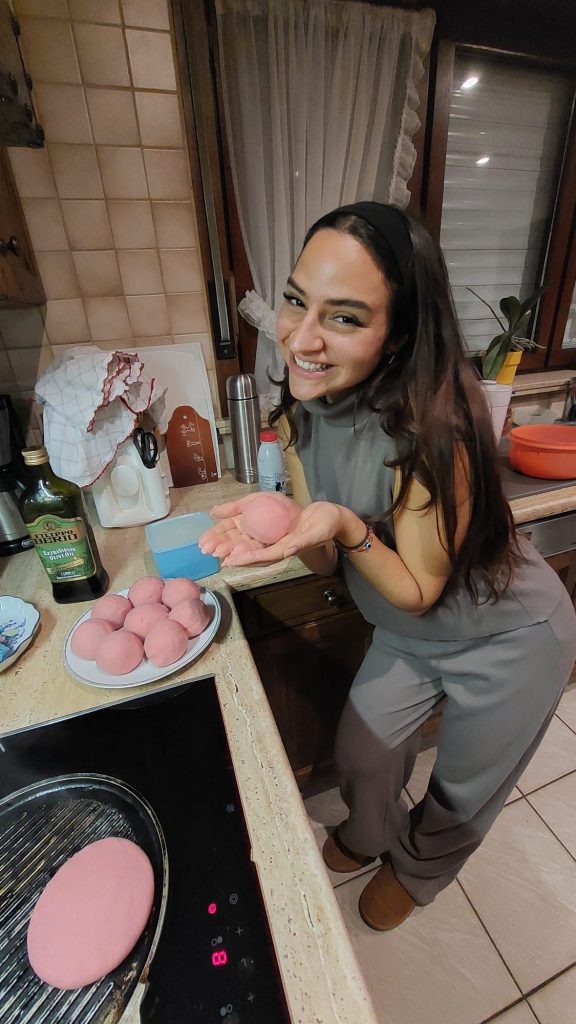
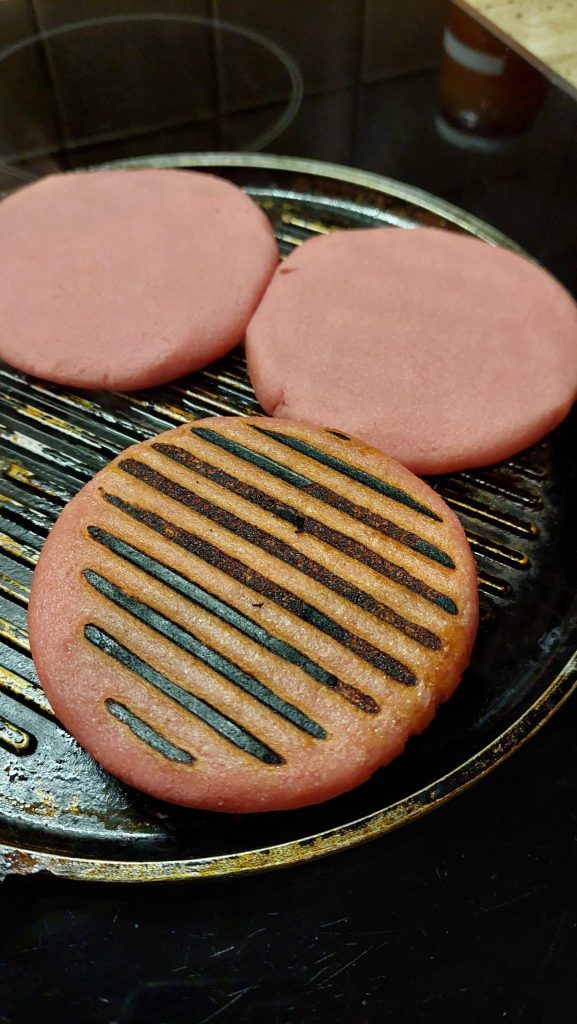
(from Mariangel’s archive)
I want to share more about Venezuela, which is the reason I’m studying journalism. I think my mission in communication is to report on the beautiful nature there, the culture, the indigenous people, and how it’s all connected. But at the same time, if there’s something wrong with respecting human rights, I want to say it. I want to show good and bad things to the world.
That is important because after the capture of Maduro by the United States, many people suddenly felt the urge to comment on it. People argue that the United States violated international law, but in Venezuela, there were actually no functioning laws or human rights protections. The country has the highest crime index and one of the worst cases of mass emigration in the world.
It is very easy for people, especially in Europe and in Western societies, to comment on a situation they have never experienced in their lives and that they know nothing about. Really, once a guy asked me if Venezuela was in Spain. It’s easy to just post on social media from the comfort of their privileged lives, with access to education, a home, three meals a day, and the opportunity to progress. I did not have that. I did not have a choice, and many other Venezuelans also don’t have these opportunities.
So, I want to inform people as today, I have a relatively good life, for which I am immensely grateful. But that does not change the fact that I have been an immigrant my entire life, facing discrimination, being judged, and having to say goodbye to friends repeatedly because I had to emigrate multiple times. Belgium is the fifth country I have lived in.
However, in Spanish we have this expression “echar para adelante”, which means “keep going forward”. Even though we come from adversity, we always try to take the best from everything. We care for our loved ones passionately and keep celebrating the positive things together. We are very resilient people. Despite everything, everywhere a Venezuelan goes, you can see that they are vibing in positive energy and always smiling.
Leave a Reply